


I shape the original of each of my creations in wax or clay, depending on its volume and the choice of bronze, solid, hollow or with a plaster or clay core.
The technique in 16 steps
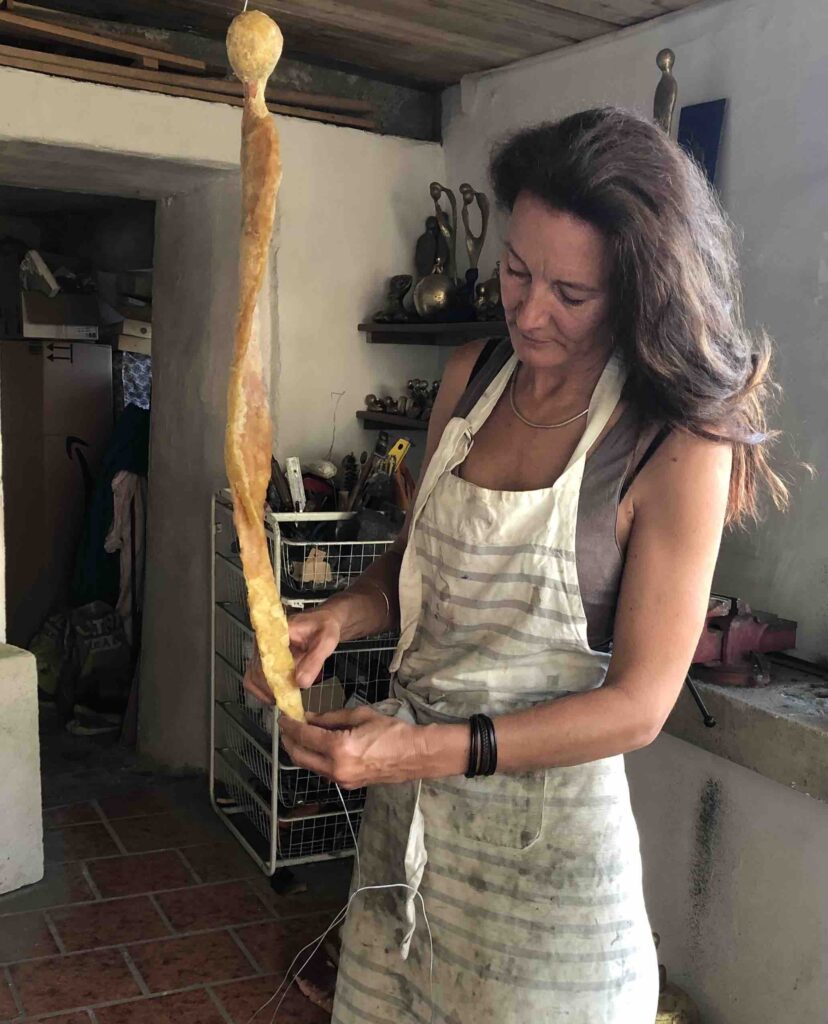
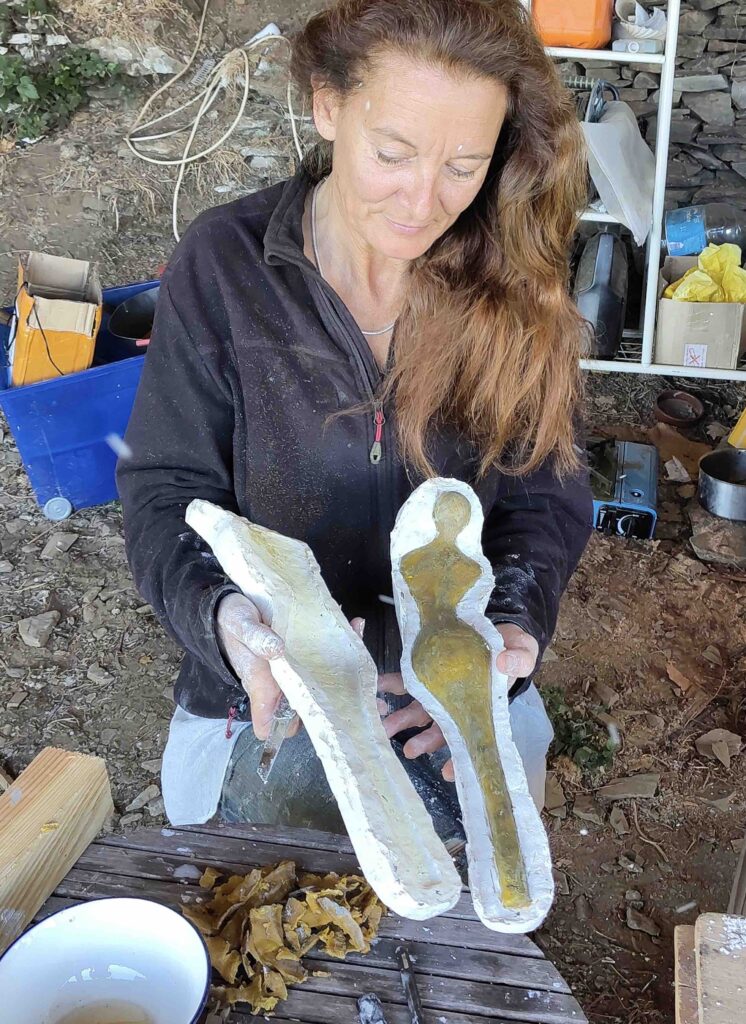
I use these original sculptures as a basis for making moulds in plaster and/or silicone, depending on the project.
These definitive moulds allow me to make several wax prints, limited and numbered editions of eight copies + 4 artist's proofs.
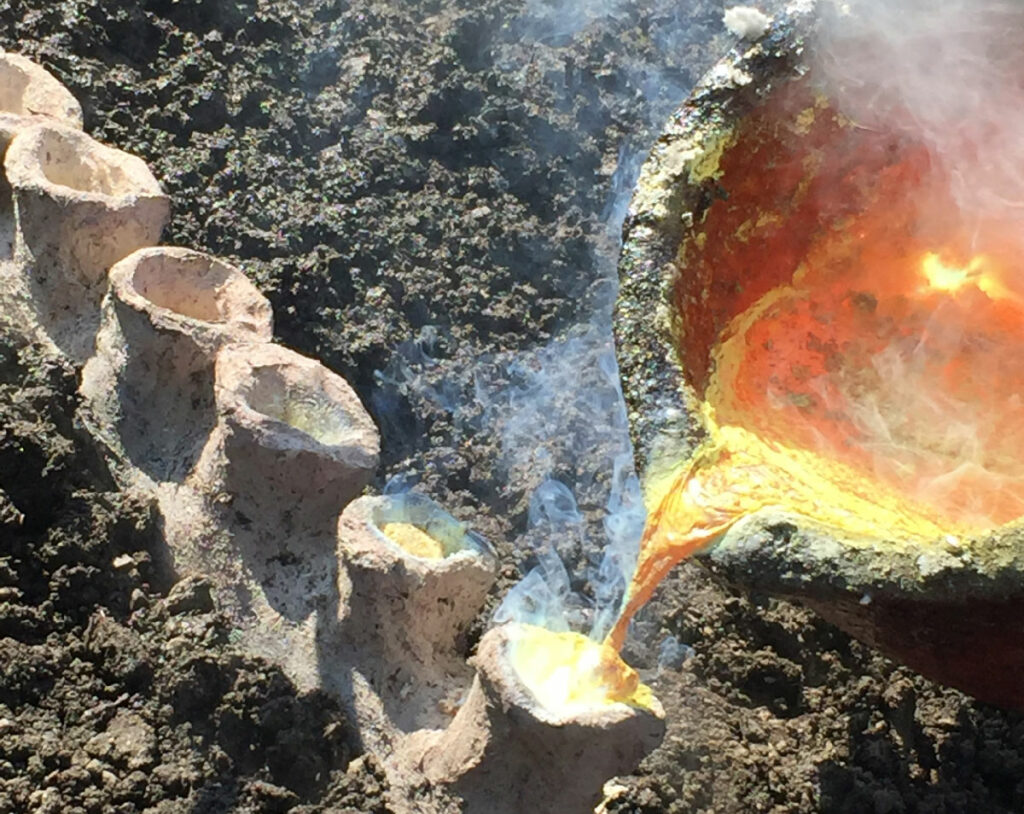
Each of these wax prints is then made into a «temporary» refractory mould, which will house the casting, i.e. the alloy of copper, tin and zinc, heated to around 1100°. This mould, which may be reinforced with iron rods if it is a large format, will be destroyed at the end of the process to reveal the result of the casting.
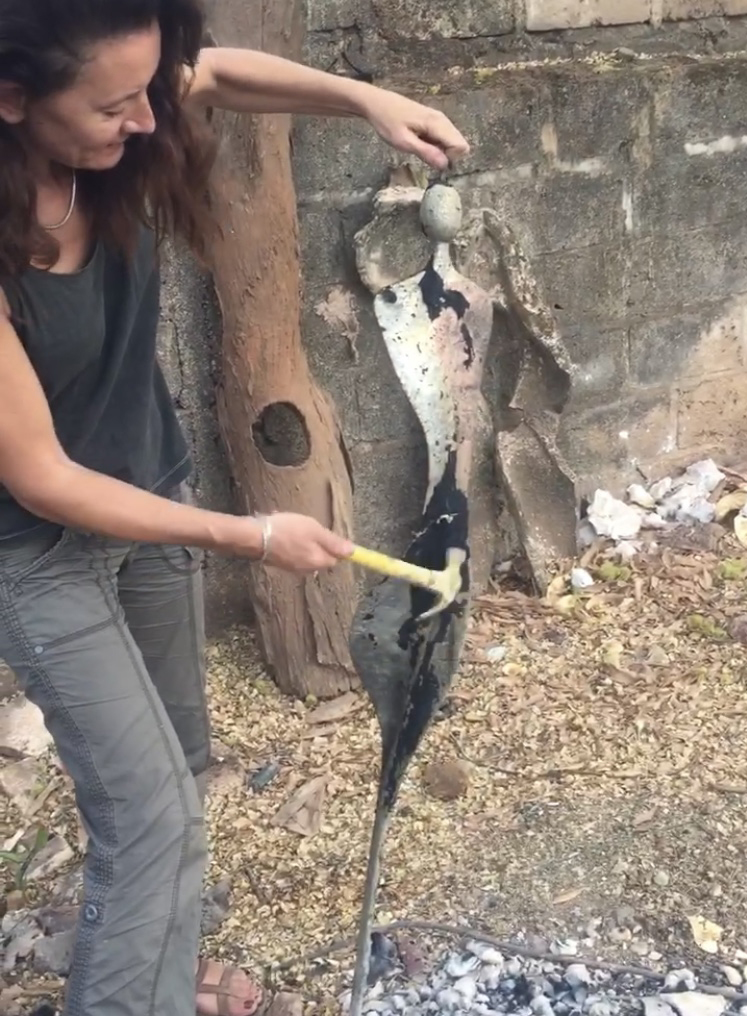
The most moving moment: breaking the mould at the end of the casting process to see the result, to see the bronze sculpture come to life.
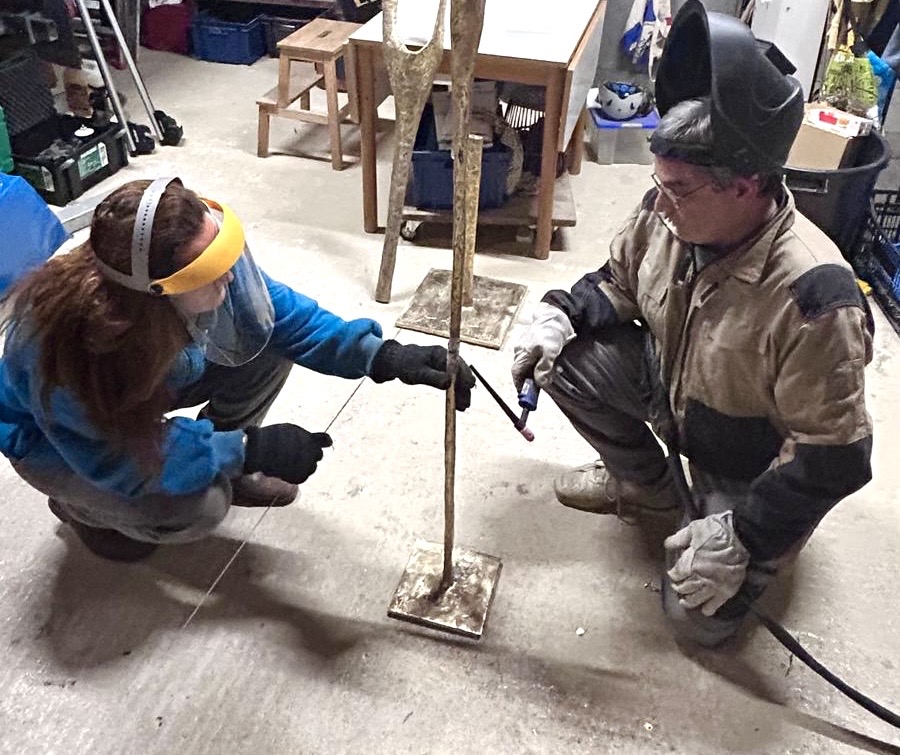
The fourth stage consists of carrying out some or all of the following finishing operations:
- a welding stage to join the parts together if necessary
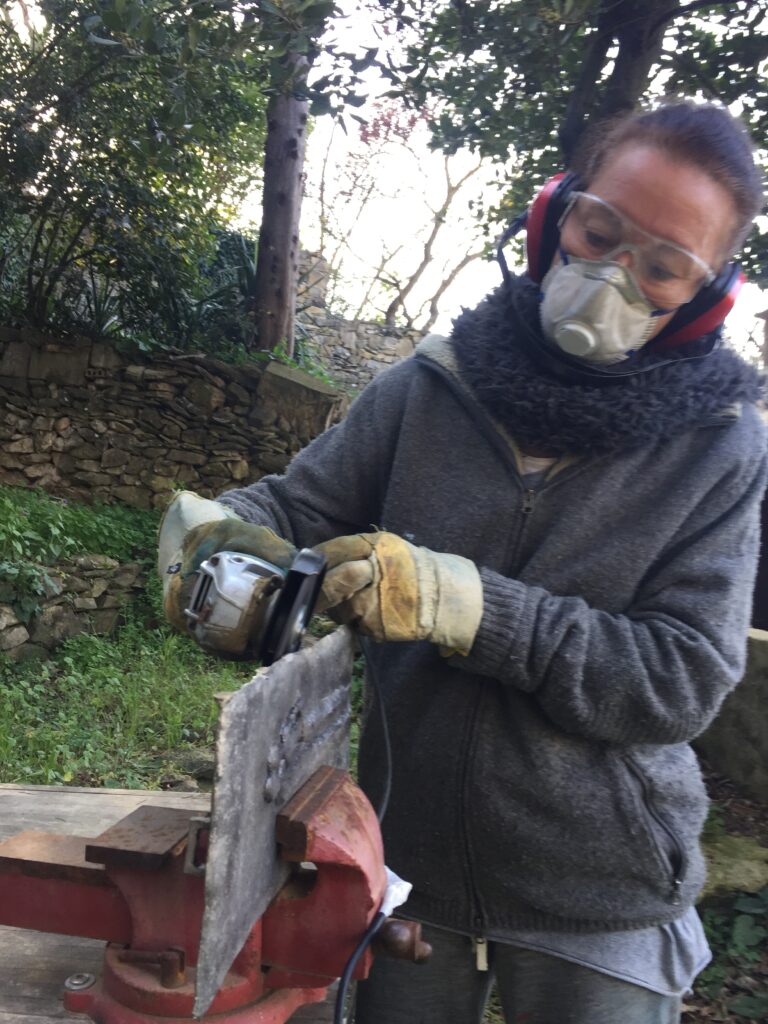
- the removal of vents and any relief defects using a disc cutter
– sanding in several passes using progressively finer grit
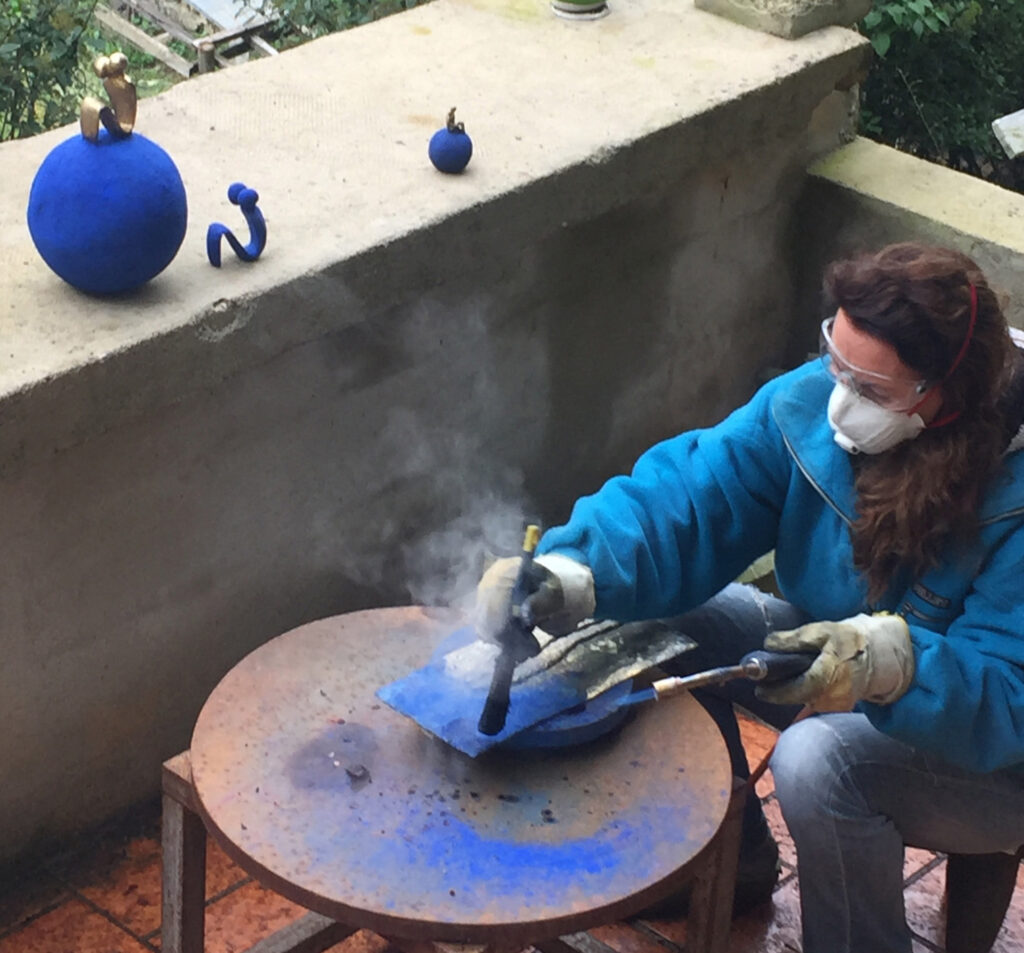
– cold or hot patina with a torch using copper nitrate and pigment mixtures
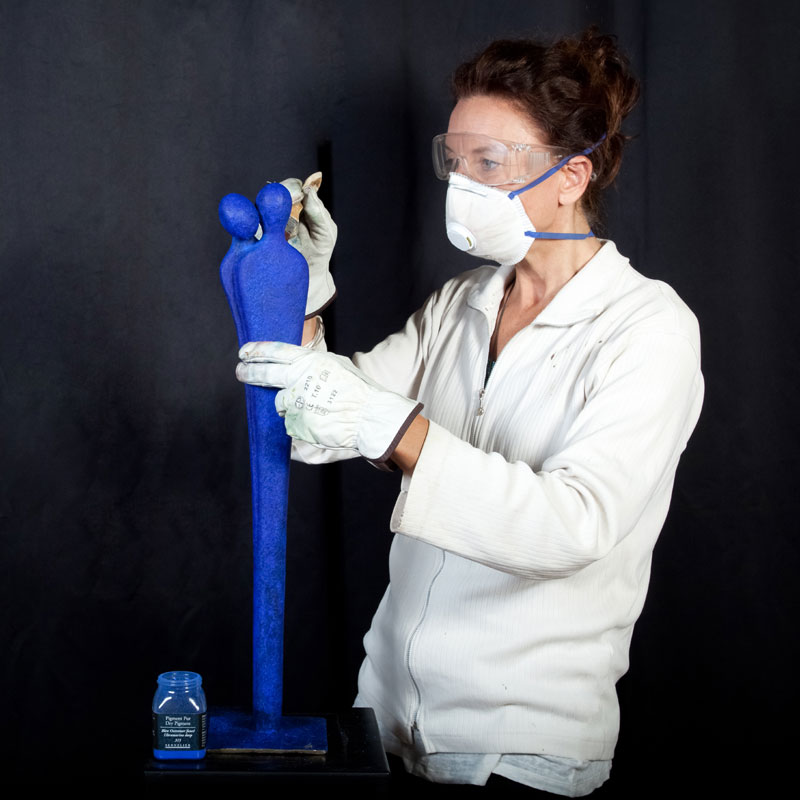
- the application of wax to protect the patina
- polishing, if necessary, to enhance the shine of the patina
- the possible addition of a metal base and the corresponding finishes.
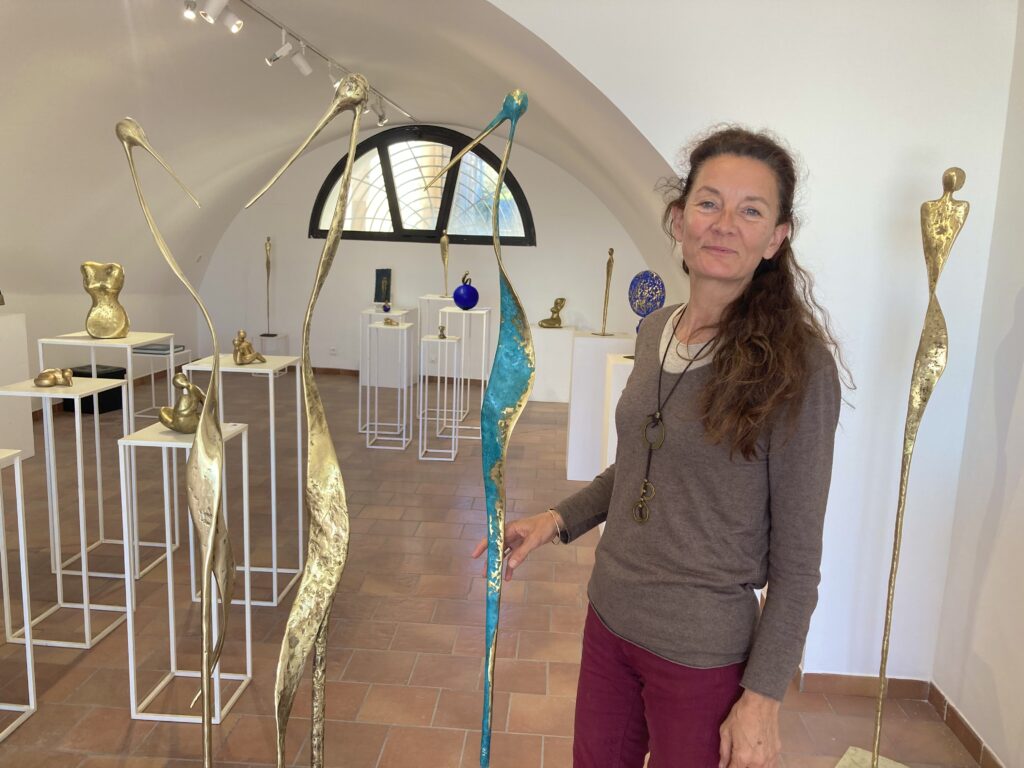
Then it's off to the exhibitions!
I work closely with two art foundrymen, a wrought iron worker to make my bases and a welder specialised in special welds.
They are invaluable professional partners, and these collaborations are great technical and human experiences.